Hello Elementor is often the first theme people install when they start building with Elementor. It is free, very light, and officially recommended as a blank canvas. That makes the next question inevitable: should you stay on Hello, or is a premium Elementor theme the better foundation?
The honest answer is that both can produce a professional WordPress site. They solve different jobs. Hello gives you maximum control and almost no design opinion. A premium Elementor theme gives you starter sites, extra widgets, Theme Builder patterns and a design system you can ship from, instead of inventing every header, archive and inner page from scratch.
This guide compares Hello Elementor with a premium Elementor theme on the points that actually affect client work: speed, design time, Theme Builder, WooCommerce, maintenance and long-term editing. It is not a “best theme of 2026” roundup. If you still need a broader buying framework, read how to choose the best Elementor WordPress theme after this.
What Hello Elementor actually is
Hello is Elementor’s official lightweight theme. It is designed to stay out of the way. It does not try to be a complete website kit. There are no opinionated homepage demos, no large widget packs and almost no theme options beyond the basics.
That is the point. Combined with Elementor Pro’s Theme Builder, Hello can become a fully custom site: header, footer, single posts, archives, WooCommerce templates and 404 pages, all designed visually.
Hello is a strong choice when:
- You (or your team) already think in Elementor templates and global styles
- The project needs a unique design that should not look like a theme demo
- You are happy to build headers, inner pages and archives yourself
- You want the smallest possible theme layer under Elementor
Hello is a weak choice when the brief is “launch a polished site this week” and nobody has already built a reusable template library.
What a premium Elementor theme actually adds
A theme built around Elementor is not just “Hello plus extra CSS.” The useful ones add a starting system:
- Complete starter sites, not only a homepage screenshot
- Inner pages designed with the same care as the hero
- A section or template library you can mix between projects
- Extra Elementor widgets for portfolios, posts, menus and motion
- Theme Builder templates for header, footer, blog, portfolio and shop
- Documented update and support cadence
The goal is not to lock you into one look. It is to stop you from rebuilding the same agency header, case-study grid and contact page on every job.
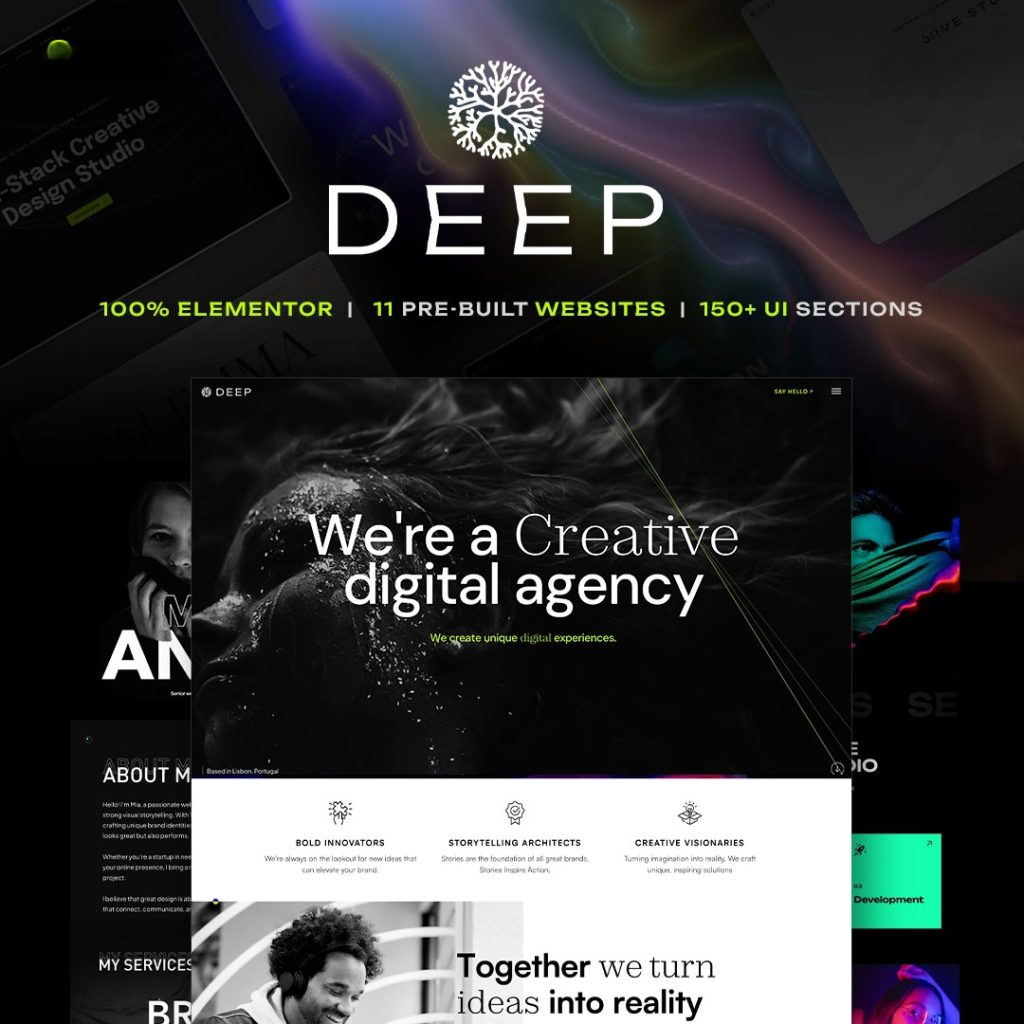
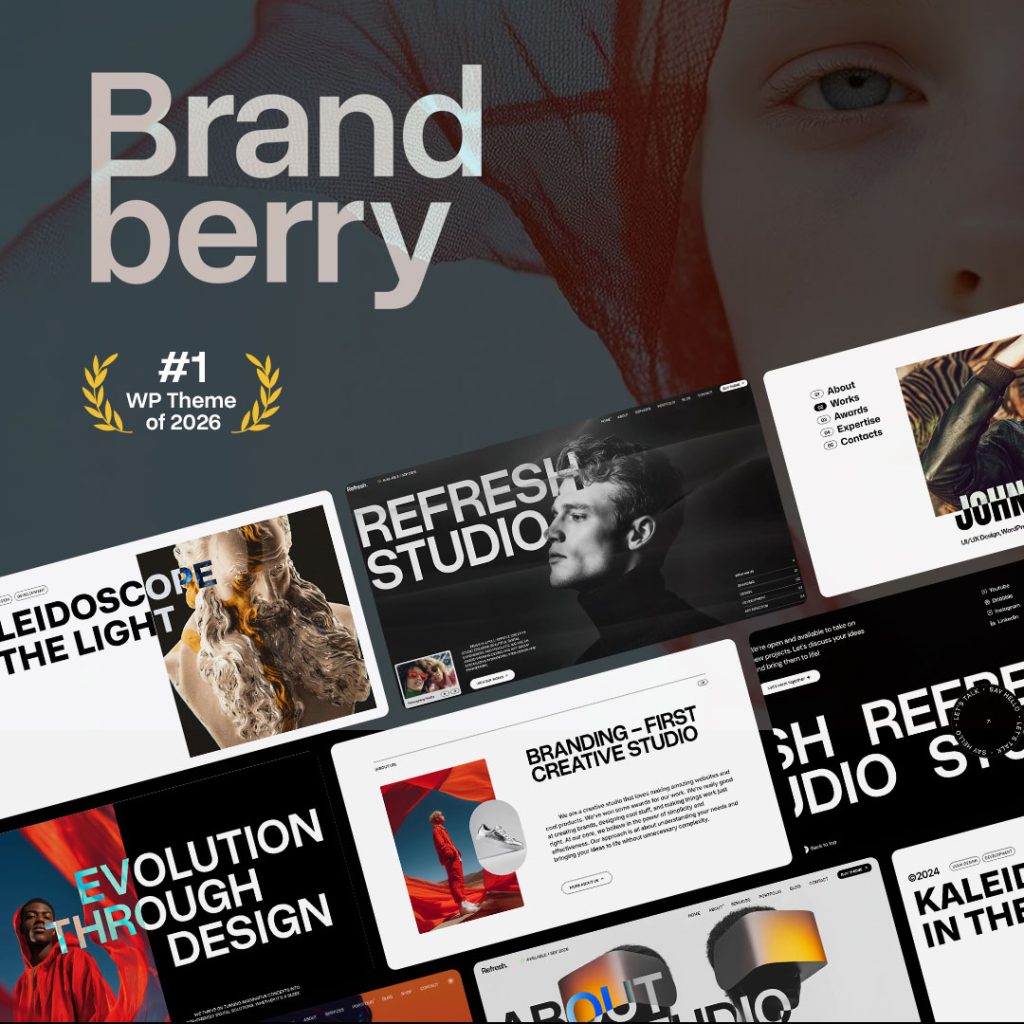
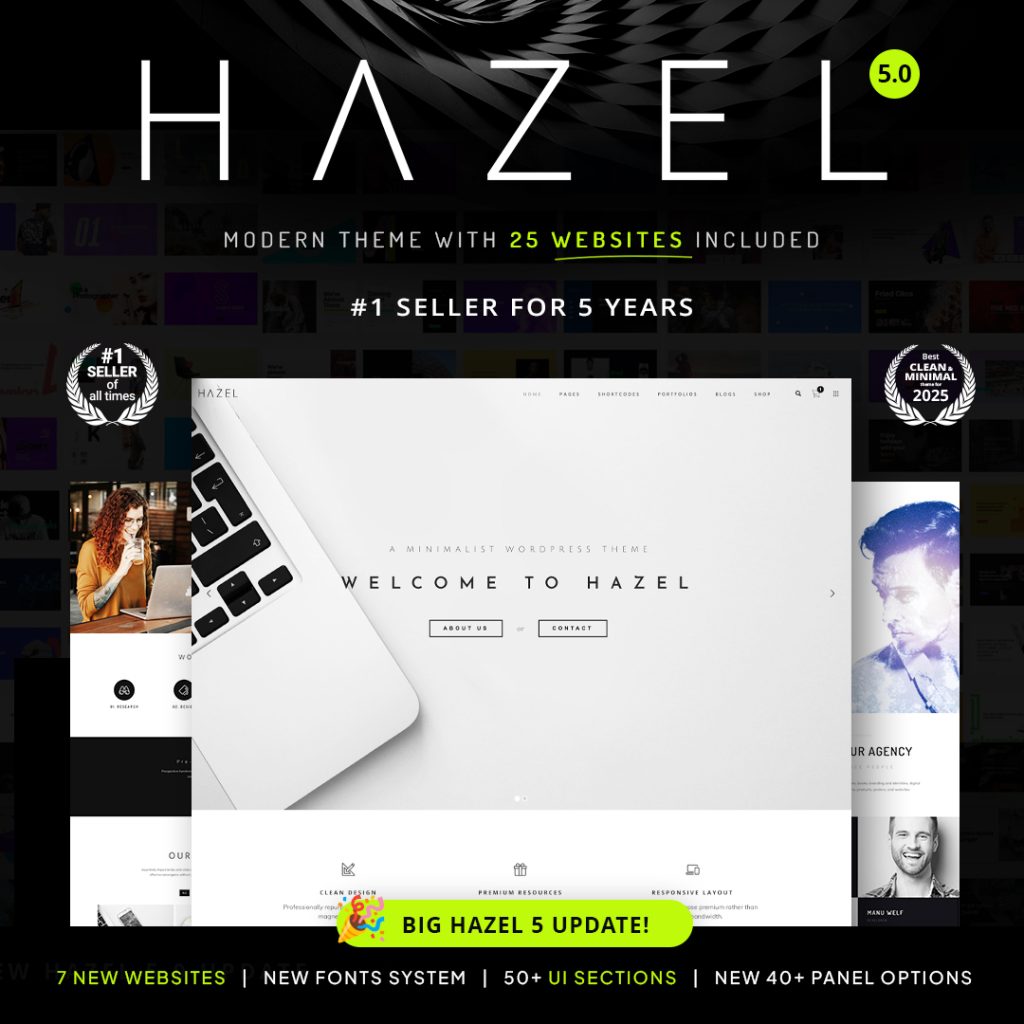
Themes such as Brandberry, Deep and Pine Elementor are examples of that approach: Elementor remains the editor, but you start from designed demos and a Theme Builder instead of an empty canvas.
Hello Elementor vs a premium theme: the real differences
1. Time to a complete website
Hello plus Elementor Pro can look excellent. It also asks you to design the entire chrome of the site: navigation, footer, blog layout, archive, maybe shop templates. That is productive if you already have a kit. It is slow if every project starts at zero.
A premium Elementor theme is usually faster to a complete site because the first import includes those templates. You still need to replace content, tighten spacing and remove sections you will not use. You should not skip that work. You just skip inventing the skeleton.
2. Performance
Hello is lighter on a clean install. That is measurable and worth respecting. A premium theme will ship more CSS, widgets and demo features.
On a real marketing site, Hello’s advantage often shrinks. Images, fonts, third-party scripts, add-on packs and Elementor widgets usually outweigh the theme file. A bloated Hello site with three add-on collections can be slower than a premium theme whose widgets you actually use and whose unused features you can disable.
Judge performance on a staging demo with your real images, not on an empty Hello install. For the practical optimization list, see how to speed up an Elementor website.
3. Design control vs design starting point
Hello wins on neutrality. Nothing in the theme fights a custom art direction.
A premium theme wins when the client needs a professional look before the custom art direction exists. Freelancers and agencies sell outcomes, not empty canvases. A designed demo helps the client say yes. It also creates a risk: if you leave demo photography and dummy case studies in place, the site looks purchased rather than built.
The rule is simple. Import a demo, then immediately replace logo, type, color tokens, hero copy and the first five images. If a section only worked because of the demo content, delete it.
4. Theme Builder and Elementor Pro
With Hello, Elementor Pro is effectively required for a complete site. Free Elementor can design page content. It cannot replace the whole theme chrome.
Some premium Elementor themes include their own Theme Builder for headers, footers, singles and archives. That can reduce how much you depend on Elementor Pro for template assignment. It does not automatically replace every Pro widget, form, popup or WooCommerce builder feature. Check the specific theme before you promise a client “no Elementor Pro needed.”
5. WooCommerce
Hello can power a store if you design the product, archive, cart and checkout templates yourself, usually with Elementor Pro’s WooCommerce Builder.
Premium Elementor themes typically include styled shop layouts and Woo-ready demos. That is useful for small catalogs, service-plus-shop sites and portfolios that also sell prints or products. For a complex store, you will still customize those templates. You should not expect any theme to be a finished conversion system on import.
6. Maintenance
Hello is maintained by Elementor. Compatibility with the builder is rarely the worry.
A premium theme’s value is the opposite kind of maintenance: demo updates, widget fixes, documentation and human support when a layout breaks after a WordPress or Elementor release. That only matters if the author is still shipping updates. An abandoned premium theme is worse than Hello.
A practical way to choose
Use Hello Elementor when:
- You already have Elementor Pro and a personal template kit
- The design must not resemble a commercial demo
- You are building a long-lived custom system, not a one-off brochure
- You will not install a large add-on pack “to make Hello feel complete”
Use a premium Elementor theme when:
- You need starter sites and inner pages, not only a homepage idea
- You build client sites regularly and want a repeatable starting point
- You want portfolio, blog or shop patterns included
- You prefer fewer third-party Elementor add-ons
- The client expects to see a designed direction in the first week
If you are choosing among premium options rather than Hello vs premium, the client-work checklist in how to choose a WordPress theme for client work is the better next read.
Can you start on Hello and switch later?
Yes, but treat it as a rebuild of templates, not a theme swap. Pages built in Elementor usually survive a theme change. Headers, footers, theme options and any theme-specific widgets do not magically map across.
If you already know you will want designed demos, it is cheaper to start on the premium theme and strip what you do not need than to design a full Hello kit and then import a demo that fights it.
Do not solve Hello’s gaps with five add-on packs
The most expensive Hello setup is not Hello itself. It is Hello plus a mega widget pack, a separate header plugin, a separate popup plugin and a separate blog layout plugin. At that point you have rebuilt a premium theme, only with more update risk and less design consistency.
If you keep reaching for add-ons to create a mega menu, post grid, portfolio or theme chrome, that is a signal that a purpose-built Elementor theme may be the simpler stack.
What you should avoid
- Choosing Hello only because it wins an empty-install speed test
- Choosing a premium theme only because the homepage animation looks impressive
- Importing a demo on production
- Leaving demo content in place and calling the site custom
- Stacking Elementor add-ons until the original speed advantage is gone
Final thoughts
Hello Elementor vs a premium Elementor theme is not a quality contest. It is a workflow contest.
Hello is the right canvas when you already have a design system and you want Elementor to own every template. A premium Elementor theme is the right foundation when you need designed starter sites, extra widgets and Theme Builder patterns that get a real website to “done” without assembling it from unrelated plugins.
If you want to compare designed Elementor starting points, browse the premium WordPress themes catalog and look at complete demos, not only homepages. Then customize immediately so the finished site belongs to the brand, not the theme.