AI WordPress website builders are no longer a demo gimmick. In 2026 you can prompt a layout, generate copy, create images and, in some tools, stand up a full Elementor site from a business brief. The results can look convincing in the first ten minutes. They can also look generic, off-brand or structurally messy once you try to edit them like a real project.
This article is a practical comparison of how AI website building actually works on WordPress, what still needs a human, and how to use these tools without shipping a cookie-cutter site. It is not a ranking of “best AI builders,” and it does not claim that AI will replace a designer or an agency workflow.
If your question is really about the theme underneath the AI, start with how to choose an Elementor WordPress theme. AI does not remove that decision. It sits on top of it.
What “AI WordPress website builder” means in 2026
The label covers several different products. Mixing them up is why people get disappointed.
- In-editor AI. Tools that write copy, generate images or suggest CSS inside Elementor or Gutenberg. They help you fill a page you already designed.
- Site generators. Tools that create a multi-page website from a prompt, often with a selected starter kit, then leave you to edit the result.
- Section generators. Tools that build one Elementor section or page from a description, using your current styles.
- Content-only AI. ChatGPT, Claude or similar, used in a separate tab to draft copy that you paste into WordPress.
- Agent / MCP workflows. An AI connected to WordPress with permission to create pages, posts, menus or products, instead of only chatting about them.
A good setup often uses more than one of these. A poor setup treats a single prompt as a finished website.
What AI is actually good at
Used with a clear brief, AI is useful for:
- First-pass page structure: home, services, about, contact, maybe a blog
- Draft copy you will rewrite in the brand voice
- Placeholder images while you commission or shoot the real ones
- Turning a long service list into section outlines
- Producing SEO article drafts that a human then fact-checks
- Repetitive WordPress tasks: pages, menus, product shells, meta titles
Those jobs save hours on a freelancer or agency project. They do not replace discovery, art direction, conversion thinking or quality control.
Where AI website builders still fall short
Most generated sites fail in the same places:
- Sameness. The layout follows the same hero / logos / services / testimonials pattern, with interchangeable stock photography.
- Weak offers. The homepage describes a category (“we are a creative agency”) instead of a specific outcome.
- Demo leftovers. Fake client names, generic FAQs and unused sections survive into launch.
- Design tokens ignored. Colors, type and button styles drift because the AI created one-off sections instead of using globals.
- Performance debt. Extra images, unused widgets and duplicated sections make the site heavier than a hand-built one.
- Confident errors. AI copy invents features, locations, results or plugin capabilities. If you do not check it, that text can go live.
Treat the generated site as a staging draft. If you would not show that draft to a paying client, it is not done.
The main options, compared by workflow
Elementor AI
Elementor’s own AI lives inside the editor. It is strongest at writing or rewriting text, generating images and helping with code or layout suggestions while you already have a page open. Elementor has also expanded into site planning and agent-style assistance.
It is a good fit when you are already committed to Elementor and want speed on individual sections. It is not automatically a replacement for a theme, a starter site or a repeatable agency kit. You still decide whether the foundation is Hello, a blank canvas or a premium Elementor theme.
Hosted “prompt-to-website” builders
Several hosts and SaaS tools generate a WordPress (or WordPress-like) site from a form: business name, industry, a few colors. They are fast for a personal brochure or a test idea. They are weaker when you need Elementor-level editing, a custom design system, or a site you will hand to a client to maintain.
Ask one question before you use them for client work: can you export a normal WordPress site that you fully own, with a theme and builder you already know how to support?
ChatGPT or Claude plus Elementor
This is still a valid workflow. You write the sitemap and copy in chat, then build the pages yourself. It is slower than a site generator and much easier to keep on-brand, because you never import a layout you did not choose.
The risk is the opposite of generators: you spend the time, but you might still paste AI copy that sounds like every other service site. A short brand voice note before you prompt helps more than a longer prompt after the fact.
Theme-native AI on WordPress
Some premium Elementor themes now include AI that can generate a complete starter website, create pages or sections, write SEO drafts and generate images inside WordPress, rather than in a separate app.
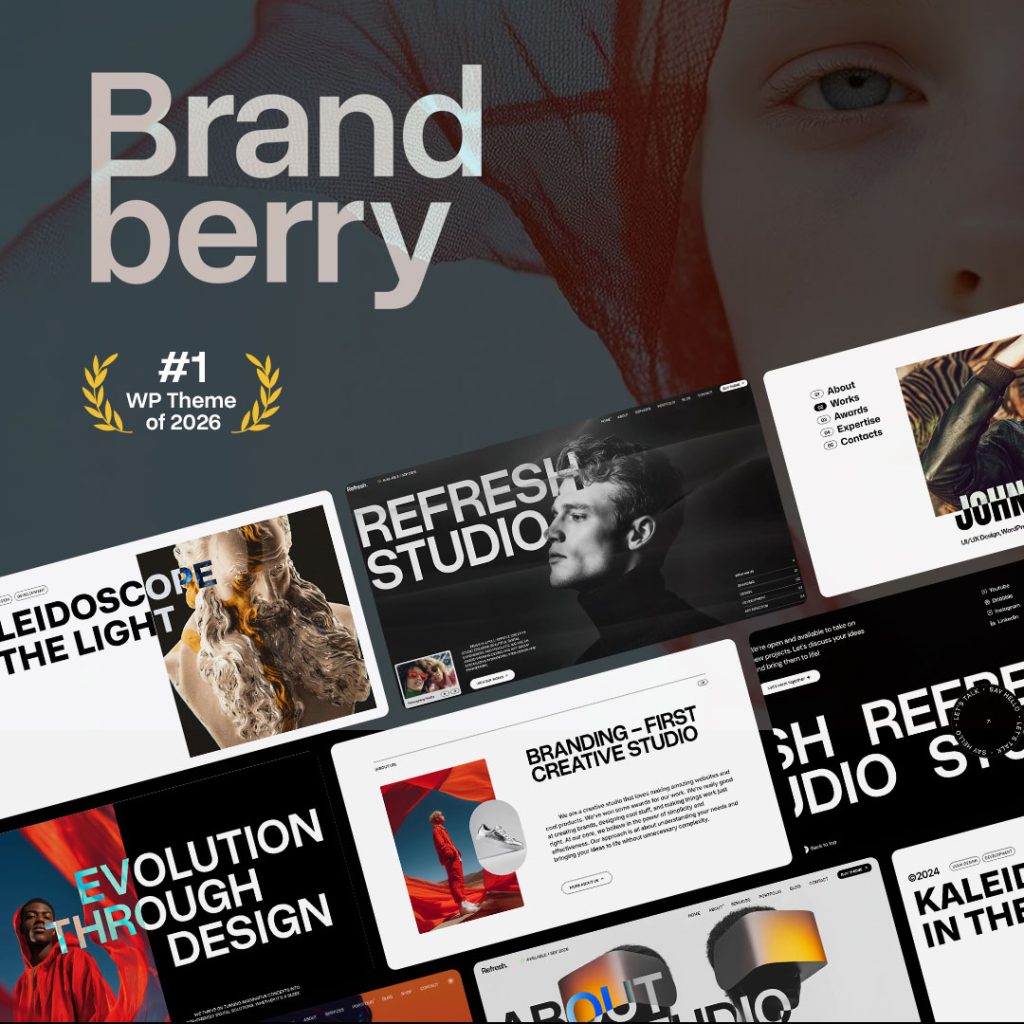
That is useful when the AI is constrained by a real design system: your logo, colors, fonts and a starter site, with the result still editable in Elementor. TreeThemes’ Leafo AI, included with Brandberry, is built around that idea: generate from a brief, then keep working in Elementor instead of locking the layout in a black box. See how Leafo works if you want the product detail. The important evaluation point is the same for any vendor: can you edit every section after generation, and does the output use your globals?
AI agents connected to WordPress
MCP and similar agent setups let an external AI create pages, posts, menus or products through WordPress tools. This is closer to an operations assistant than a design tool. It is powerful for content production and site chores. It is a poor way to invent visual identity.
Use agents for structured tasks with a review step. Do not give an agent production access and walk away.
A workflow that keeps the site unique
- Write the job in one sentence. Who it is for, what it sells, what happens after the main CTA.
- Choose the foundation first. Theme, starter site and Elementor globals before any AI generation.
- Generate on staging. Never prompt a live site into existence.
- Replace the identity immediately. Logo, colors, type, hero copy, real images.
- Delete anything generic. If a section could belong to any business in the industry, it does not belong on this site.
- Check facts. Services, prices, locations, results and plugin claims.
- Measure the page. Images, fonts and unused sections still affect LCP and CLS. AI does not optimize those for you.
Agencies that already have a demo, staging and handoff process should keep it. AI belongs inside that process, not instead of it. The existing agency Elementor workflow still applies.
AI for SEO content is a separate job
Generating a website and generating a blog program are related, but they are not the same tool. An AI article generator can draft a post from a keyword. It cannot know your existing URLs, your product truth or whether the topic already cannibalizes another article.
If you use AI for blog content:
- Give it your published posts so it does not repeat them
- Require a focus keyword, SEO title and meta description
- Edit until the article answers a real search question
- Add internal links to pages you actually want to rank or convert
- Do not publish unverifiable claims about rankings, speed scores or results
Search engines do not need to “detect AI.” Thin, duplicated, over-promotional pages fail for the same reasons they always failed.
Who should use which approach
- Solo business owner, first site. A generator plus a designed Elementor starter site is usually faster than a blank canvas. Budget time to replace the generic copy.
- Freelancer shipping monthly client sites. Keep a premium Elementor theme and a small demo library. Use AI for copy, sections and first drafts, not for a new visual identity every time.
- Agency with a design system. Use AI inside globals and templates. The win is throughput, not novelty.
- Developer automating content ops. Agents and MCP make sense after the templates exist.
Questions to ask before you buy an AI builder
- Does it output native Elementor (or Gutenberg) that I can edit later?
- Can it use my logo, colors and fonts, or only its own palette?
- Are credits, subscriptions and image rights clear?
- Does it create a full sitemap, or only a homepage?
- What happens when I need a human to fix the layout?
- Will the generated blog posts conflict with pages I already published?
If a product cannot answer those questions, it is a demo, not a workflow.
Final thoughts
The useful AI WordPress website builders in 2026 are the ones that get you to an editable first draft faster. The ones that fail are the ones that hide the editing, invent the brand voice and leave you with a site that looks like every other generated homepage in the same niche.
Choose the foundation first, generate on staging, then spend your time on the parts AI cannot see: the offer, the proof, the real images and the conversion path. That is how these tools help organic traffic and client delivery, instead of just filling a blank page.
If you want an Elementor-native path from brief to editable site, look at Brandberry and Leafo AI, then judge them the same way you would judge any other builder: by the quality of the site after you have customized it, not by the first prompt.